

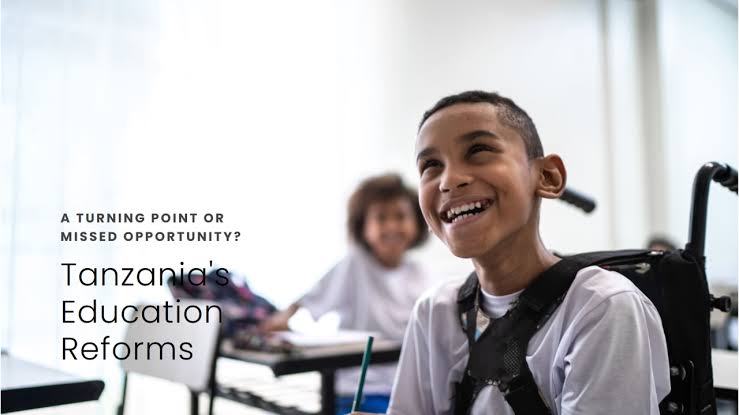
Tanzania Education News Today: Curricular Reforms, Digital Transformations, and Policy Shifts Shaping the Future, Tanzania’s education sector is undergoing a profound structural evolution, making Tanzania education news today a high-priority topic for parents, educators, and regional policy analysts. Driven by the full rollout of the New Education and Training Policy 2023 Edition, the Revolutionary Government of Tanzania is radically overhauling its academic landscape. The focus has firmly shifted from rote memorization to vocational competence, digital literacy, and universal accessibility.
From the implementation of the new 10-year basic education structure to massive infrastructural expansions under the Higher Education for Economic Transformation (HEET) project, here is the comprehensive breakdown of the major updates rewriting Tanzania’s educational narrative.
1. The Rollout of the New Curriculum: Inside the 1-6-4-4 System
The biggest story dominating regional headlines is the systematic phased implementation of the updated national curriculum. This milestone is structurally changing how children progress through the school pipeline.
Deconstructing the New Academic Timeline
Historically, Tanzania adhered to a 7-4-2-3 structure (seven years of primary, four years of ordinary secondary, two years of advanced secondary, and three or more years of higher education). Under the new framework, the system transitions to a streamlined timeline:
-
- 1 Year of compulsory pre-primary education.
- 6 Years of primary education (reduced from seven years), culminating in the National Standard Six Assessment.
- 4 Years of lower secondary education (Ordinary Level).
- 4 Years of higher or advanced vocational training.
General vs. Vocational Pathways
A key pillar of this reform is the introduction of dual pathways at the secondary school level. Upon entering Form One, students are assessed and placed into either the General Academic Stream or the Vocational/Technical Stream. This structural intervention ensures that students who are less inclined toward traditional academics can specialize early in sports, agriculture, creative arts, mechanics, or digital technologies, graduating with practical, market-ready skills.
2. Higher Education Transformation: The $425 Million HEET Project Acceleration
In the tertiary sector, the Ministry of Education, Science and Technology, alongside the World Bank, has accelerated the Higher Education for Economic Transformation (HEET) project. This massive initiative aims to revitalize public universities to meet the labor demands of a modern economy.
Key Milestones of the HEET Project:
-
- Infrastructural Expansion: Construction of new lecture halls, modern laboratories, and student hostels is nearing completion at major institutions, including the University of Dar es Salaam (UDSM), Sokoine University of Agriculture (SUA), and Mbeya University of Science and Technology (MUST).
- Campus Decentralization: Public universities are actively establishing new regional campuses in previously underserved areas such as Kagera, Lindi, and Shinyanga to democratize access to degree-level education.
- Curriculum Review: Over 300 higher education programs have been updated to incorporate mandatory industry attachments, entrepreneurship units, and digital competencies.
3. The Digital Revolution: E-Learning and NECTA Portals Automation
The digitization of administrative frameworks remains a core component of the latest Tanzania education updates. The National Examinations Council of Tanzania (NECTA) and the Higher Education Students’ Loans Board (HESLB) have fully automated their public service delivery interfaces.
Paperless Loan Processing via HESLB OLAMS
The Higher Education Students’ Loans Board has upgraded its Online Loan Application and Management System (OLAMS). The platform features integrated digital verification setups tied directly to the National Identification Authority (NIDA) database. This automated synchronization effectively cuts down data errors, speeds up the vetting of vulnerable applicants, and accelerates funding disbursements to students.
Cloud-Based Teacher Training Platforms
To support the newly introduced national curriculum, the government has launched state-backed Learning Management Systems (LMS). These e-learning portals enable tens of thousands of primary and secondary school teachers across rural districts to access self-paced professional development modules, master the new syllabus, and download standardized teaching materials digitally.
4. Language of Instruction: The Kiswahili vs. English Balance
The debate surrounding the language of instruction remains an active and vital discussion within the country’s academic discourse.
Strengthening Foundational Swahili
The current policy approach reinforces the usage of Kiswahili as the primary medium of instruction and assessment throughout the foundational six years of primary school. Educational experts point out that introducing complex concepts in a child’s native or national language dramatically boosts early-grade literacy and mathematical understanding.
Enhancing English Competency for the Global Market
While Kiswahili rules primary education, the government is simultaneously executing targeted programs to bridge the language gap as students transition into secondary schools and universities, where English remains the primary instructional language. This includes intensive English-language immersion camps for primary school graduates and digital language-lab installations in newly built public secondary schools.
Frequently Asked Questions (FAQs) About Tanzania Education News Today
What is the new education system in Tanzania?
Tanzania is transitioning to a 1-6-4-4 system consisting of one year of pre-primary, six years of primary, four years of lower secondary, and four years of higher or technical education.
How do I check NECTA exam results online?
You can access official national exam results by visiting the main NECTA portal (
necta.go.tz), selecting the specific exam tier (such as ACSEE, CSEE, or SFNA), entering your candidate index number, and selecting the exam year.What is the purpose of the HEET project in Tanzania?
The Higher Education for Economic Transformation (HEET) project is a World Bank-funded government initiative designed to upgrade infrastructure, update academic curricula, and build teaching capacity across public universities.
Are vocational studies free in Tanzania’s new curriculum?
The government extends its fee-free basic education policy to encompass public technical and vocational streams at the lower secondary level, aiming to increase youth enrollment in technical fields.
Strategic Pro-Tips for Educational Stakeholders
- For Parents: Keep student information updated with NIDA records, as all major educational registrations—including NECTA registration and HESLB loan applications—now require valid national identification links.
- For Educators: Actively log into the Ministry of Education’s regional portals to participate in continuous professional development courses tailored to the new curriculum framework.
- For Investors: Focus on the growing demand for digital educational software, localized e-learning content, and private vocational training equipment.
The current transformations happening across Tanzania’s educational ecosystem represent a bold leap toward preparing the nation’s youth for a highly competitive global digital economy. By tackling foundational infrastructure gaps, rolling out a skills-focused curriculum, and digitizing critical administrative portals, Tanzania is building an accessible, future-proof academic model.
Bookmark this page to ensure you stay permanently updated on breaking Tanzania education updates, NECTA results releases, and higher education funding structural changes!
ALSO YO MAY READ:-