

Karamoja Food Aid in Uganda: Navigating the 2026 Emergency Relief and Long-Term Solutions
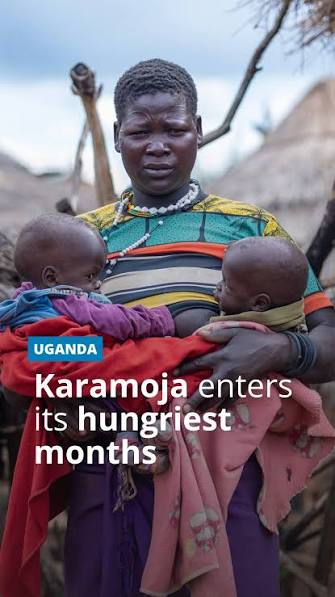
The hunger crisis in northeastern Uganda has reached a critical turning point, making Karamoja food aid updates a central focus for humanitarian organizations, global health watchdogs, and regional policymakers. In response to an intensely severe, unexpected dry spell that has caused a 50% to 70% crop failure across the sub-region, the Government of Uganda has launched a massive, multi-billion-shilling emergency relief intervention.
Historically a semi-arid zone susceptible to climate shocks, the Karamoja region is currently experiencing acute food insecurity, with several districts categorized in IPC Phase 3 (Crisis). To mitigate immediate starvation following reported hunger-related fatalities in the worst-hit areas, the Office of the Prime Minister (OPM) has set a major logistics deployment into motion.
This high-density, SEO-optimized guide breaks down the structural mechanics of the 2026 emergency response, the key districts targeted, the structural shifts in aid distribution, and the necessary transition from short-term relief to long-term sustainable agricultural resilience.
1. Inside the 2026 Emergency Food Relief Operation
The immediate survival of over a quarter-million individuals relies entirely on the successful deployment of the Uganda emergency food relief program. Following an emergency cabinet directive led by Prime Minister Robinah Nabbanja, the state has activated an emergency fund to stabilize vulnerable households.
Key Logistics of the 2026 Relief Package:
- The Scale of Distribution: The government has flagged off 9.4 million kilograms (approximately 9,400 metric tonnes) of food relief.
- Target Population Matrix: The emergency distribution is explicitly mapped to reach 313,987 households spread across 480 parishes.
- The Food Basket Composition: To maximize basic caloric intake, the aid package consists primarily of maize flour (posho) and dry beans.
- Geographical Coverage: The intervention spans all nine districts of the Karamoja sub-region, namely Abim, Amudat, Kaabong, Karenga, Kotido, Moroto, Nabilatuk, Nakapiripirit, and Napak.
2. Strategic Shift: Deploying the Army (UPDF) to Stop Aid Theft
A major operational update that distinguishes this intervention from previous years is a radical restructuring of the supply chain. To completely eliminate non-tariff logjams, distribution delays, and the persistent threat of corruption, President Yoweri Museveni ordered a total halt on the use of private delivery contractors.
Leveraging the Uganda People’s Defence Forces (UPDF)
Under the new executive directive, emergency food relief is being handled, transported, and distributed directly by the Uganda People’s Defence Forces (UPDF) and the Uganda Prisons Service. The military’s extensive transport infrastructure is being used to move hundreds of tonnes of grain directly from national farms to ground-level parish centers. This secure logistical network ensures that food supplies bypass bureaucratic leakages and safely reach the most vulnerable.
3. Worst-Hit Areas: Prioritizing Kaabong, Kotido, and Moroto
While the food crisis affects the entire sub-region, humanitarian tracking by the Integrated Food Security Phase Classification (IPC) reveals specific hot zones requiring immediate, intense intervention.
1. Kaabong District
Recognized as the epicenter of the current dry spell crisis, Kaabong is receiving top priority in the logistics queue. Total crop failures since the traditional April planting season have depleted household stocks, making external food inputs an absolute matter of survival.
2. Kotido and Karenga Districts
According to recent food security data, Kotido records some of the lowest Household Dietary Diversity Scores (HDDS) in the sub-region. Families here have seen their local crop production entirely wiped out by the unexpected drought, leaving them structurally dependent on incoming grain convoys.
3. Moroto District
In Moroto, the intersection of diminished livestock numbers, climate shocks, and high regional fuel costs has drastically reduced household purchasing power. Between 25% and 35% of the population in this zone faces ongoing Crisis-level (IPC Phase 3) outcomes, requiring sustained nutritional support until the next seasonal harvest window.
4. Breaking the Cycle: Transitioning from Food Aid to Resilience
While the current 9.4 million-kilogram food drop is a vital lifesaver, international agencies like the World Food Programme (WFP) Uganda and local development partners emphasize that chronic reliance on emergency food aid is unsustainable. Transitioning the Karamojong from vulnerable rain-fed farming to resilient livelihoods requires practical, structural interventions.
1. Solar-Powered and Micro-Irrigation Schemes
Relying strictly on highly erratic rain patterns has repeatedly crippled local agriculture. The Ministry of Agriculture, Animal Industry and Fisheries (MAAIF) is actively steering investments toward climate-smart farming models, including solar-powered micro-irrigation systems and water-for-production dams to guarantee a steady water supply regardless of seasonal dry spells.
2. Crop Diversification and Homegrown School Meals
Introducing drought-tolerant, highly nutritious crop varieties is already proving effective. In collaboration with local smallholder farmers, the WFP has successfully scaled up the production of orange-fleshed sweet potatoes and resilient cereals across hundreds of local schools. This approach drives food directly into local school feeding programs while building smallholder supply chains.
3. Regenerative Agriculture and Environmental Protection
Unchecked soil erosion and rangeland degradation have significantly lowered soil productivity across the sub-region. Non-governmental organizations are systematically introducing regenerative agriculture techniques, teaching communities to establish tree nurseries, construct physical earthworks to retain soil moisture, and utilize cover crops to restore degraded soils.
Lets ask ourselves About Karamoja Food Aid
What caused the current food crisis in Karamoja?
The primary driver is a prolonged, severe dry spell that started during the April planting season, causing a catastrophic 50% to 70% crop failure and rapidly depleting household food reserves.
How much food aid is the Ugandan government distributing to Karamoja?
The government is distributing 9.4 million kilograms of emergency relief food, which includes high-grade maize flour (posho) and dry beans.
Who is in charge of distributing the relief food in 2026?
To ensure efficiency and prevent theft, President Museveni directed that the Uganda People’s Defence Forces (UPDF) and the Uganda Prisons Service take complete charge of hauling and distributing the food directly to local parishes.
Which districts are receiving the highest priority?
While the operation covers all nine districts of the sub-region, the first waves of emergency deliveries are being concentrated heavily in Kaabong, Kotido, and Karenga due to severe malnutrition metrics.
Strategic Operational Insights for Humanitarian and Development Stakeholders
- Align with Military Logistics: NGOs and civil society groups operating in the region should coordinate their nutritional interventions directly with the UPDF-led parish drop schedules to avoid duplicating efforts.
- Invest in Quality Seeds: Agricultural suppliers should look into sourcing early-maturing, drought-resistant seed varieties (like cassava cuttings and rapid-yield beans) to support upcoming recovery and planting phases.
- Prioritize Livestock Health: Alongside food drops, implementing large-scale livestock vaccination drives against Foot and Mouth Disease (FMD) is critical to protecting pastoral assets, which serve as an essential fallback resource for families.
The deployment of the Karamoja food aid operation is a vital, lifesaving step toward buffering northeastern Uganda from an unprecedented environmental crisis. By leveraging the logistical strength of the UPDF to protect the distribution network, the state is showing a strong commitment to immediate public accountability. However, the long-term solution lies in moving past emergency relief trucks and building a climate-resilient agricultural framework that can withstand future climate shocks.