


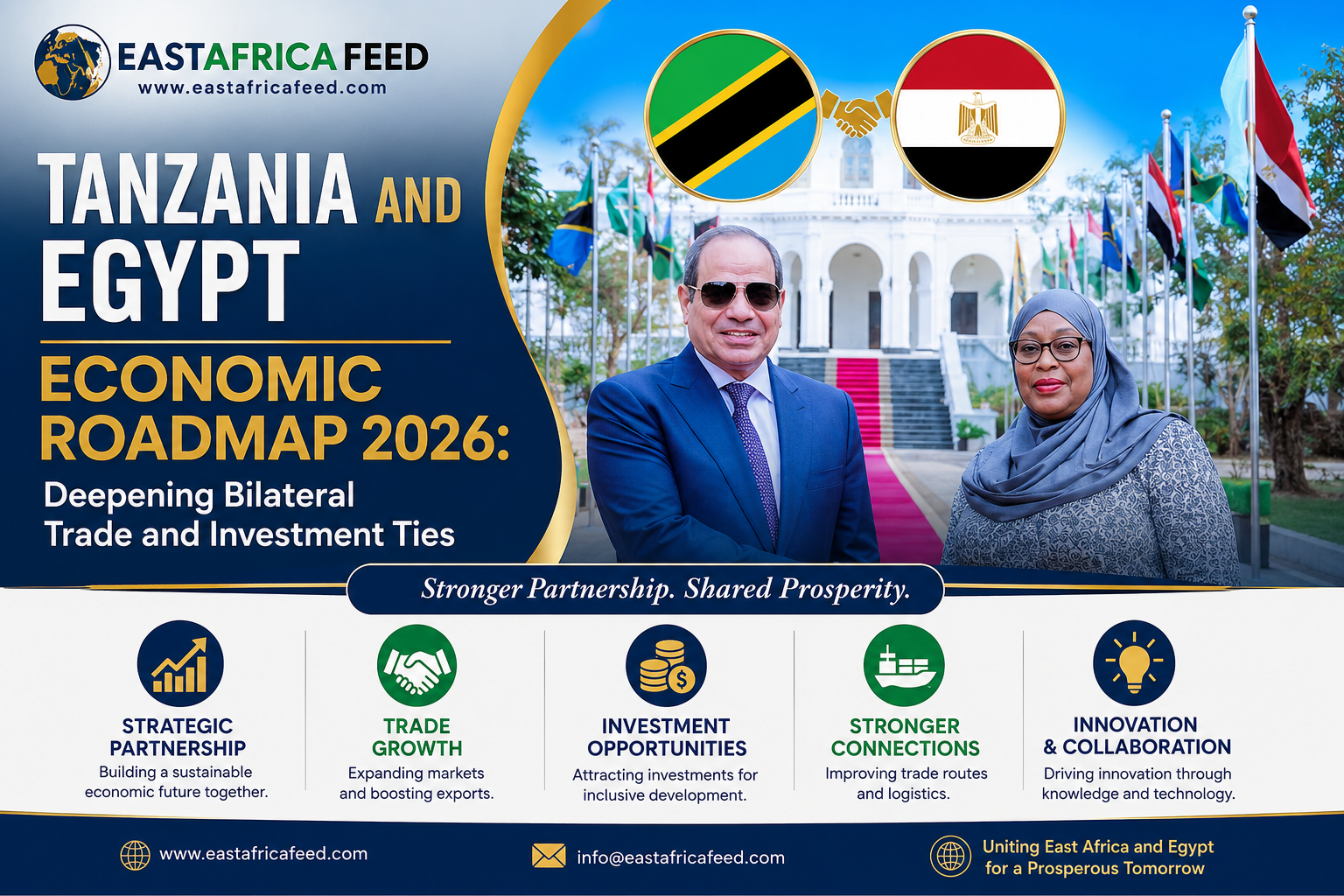
Tanzania and Egypt Economic Roadmap 2026: Deepening Bilateral Trade and Investment Ties
The economic landscape of the African continent is shifting rapidly under the African Continental Free Trade Area (AfCFTA) framework, making the latest Tanzania and Egypt economic roadmap a focal point for global investors, regional trade councils, and macroeconomic policymakers. In a historic bilateral diplomatic breakthrough, the governments of Tanzania and Egypt have officially finalized a comprehensive, long-term economic roadmap explicitly designed to accelerate bilateral trade volume, unlock cross-border infrastructure investments, and build unified industrial networks.
Historically, trade between the East African Community (EAC) giant and North Africa’s primary industrial powerhouse operated below potential due to fragmented transport logistics and regulatory mismatches.
However, this freshly signed strategic economic roadmap completely transforms relations, turning bilateral cooperation into a practical blueprint for deep intra-African trade integration.
This comprehensive, highly optimized SEO guide breaks down the core pillars of the Tanzania-Egypt bilateral treaty, targeting key sectors like infrastructure, agriculture, manufacturing, and energy, while analyzing the broader economic impacts for both nations.
1. Macroeconomic Context: The Scale of the New Economic Roadmap
The Tanzania-Egypt bilateral trade treaty represents a highly coordinated effort to harmonize the investment regulations of two of Africa’s fastest-growing economies. With Tanzania tracking an annual GDP growth rate of nearly 6% and Egypt asserting itself as a top destination for foreign direct investment (FDI) on the continent, this economic roadmap provides a secure legal framework for major institutional capital commitments.
Core Strategic Objectives:
-
- Trade Volume Acceleration: The roadmap aims to triple direct trade volume between Dar es Salaam and Cairo over the next 48 months, pushing total bilateral exchange values past the US$500 million mark.
- Elimination of Non-Tariff Barriers (NTBs): Establishing automated, digitalized customs clearings and harmonizing product standardization protocols to slash border delays.
- Joint Investment Protections: Implementing legal safeguards that fully protect private capital deployments, making it easier for state corporations and private enterprises to build joint-venture operations.
2. Infrastructure Transformation: Leveraging Egyptian Engineering in Tanzania
A cornerstone of the latest Tanzania and Egypt updates is the massive involvement of premier Egyptian engineering conglomerates in upgrading Tanzania’s national infrastructure grid. This collaboration serves as the physical backbone enabling large-scale trade logistics.
The Julius Nyerere Hydropower Project (JNHPP)
The ultimate symbol of Egypt-Tanzania technical synergy is the massive Julius Nyerere Hydropower Project (JNHPP) along the Rufiji River. Constructed through a joint venture of top-tier Egyptian infrastructure giants—including Arab Contractors and Elsewedy Electric—the 2,115-megawatt mega-dam has successfully transitioned into its peak power generation phase. Under the newly finalized economic roadmap, the scope expands to include:
-
- Upgrading regional smart grid connectivity networks to distribute stable electricity across the EAC.
- Advanced technical training exchanges where Egyptian energy experts train engineers from the Tanzania Electric Supply Company (TANESCO).
3. Agricultural Corridors and Food Security Integration
With global supply chains facing climate and geopolitical disruptions, food security sits at the very heart of the Tanzania and Egypt economic roadmap. The agreement creates a complementary agricultural corridor that benefits both nations’ geographical advantages.
Livestock and Meat Processing Networks
Egypt has a high demand for red meat and livestock imports. Tanzania, which boasts one of the largest livestock populations on the African continent, has historically struggled with a lack of modern, export-certified abattoirs. The roadmap addresses this gap directly:
-
- Joint Ventures in Processing: Egyptian agribusiness firms are heavily investing in constructing state-of-the-art, automated meat processing facilities in Arusha, Dodoma, and Dar es Salaam.
- Direct Export Corridors: Establishing dedicated, cold-chain transport networks to ship high-quality, processed Tanzanian meat products directly to Egyptian consumer markets, bypassing expensive middleman logistics.
Fertilizer and Soil Nutrition Exchange
On the reverse side of the trade corridor, Egypt’s advanced chemical manufacturing sector is rolling out localized fertilizer blending plants inside Tanzania. By providing smallholder farmers across Tanzania with tailored, high-grade fertilizers at subsidized costs, the partnership is driving up regional crop yields for cash crops like cotton, cashew nuts, and tea.
4. Manufacturing Expansion: Setting Up Special Egyptian Industrial Zones
To transition away from exporting raw materials, the Ministry of Industry and Trade in Tanzania, alongside Egypt’s Ministry of Trade and Industry, has set aside dedicated land parcels for the creation of Special Egyptian Industrial Zones.
Localized Pharmaceutical Production
East Africa relies heavily on importing life-saving pharmaceutical products from Asia and Europe. Under the new economic roadmap, Egyptian medical manufacturing giants are building localized production plants inside Tanzania’s special economic zones (SEZs). These facilities focus on producing affordable generic medications, vaccines, and medical equipment for distribution across the entire SADC and EAC blocs.
Real Estate and Construction Materials
As Tanzania pushes forward with its massive infrastructure projects—including the Standard Gauge Railway (SGR) expansion and urban center redevelopments—the demand for construction materials has soared. Egyptian cement, steel, and electrical cable manufacturers (such as Elsewedy Electric’s industrial parks in Kigamboni) are scaling up local production, creating thousands of industrial jobs for Tanzanian youth.
More About the Tanzania-Egypt Economic Roadmap
What is the primary focus of the Tanzania and Egypt economic roadmap?
The roadmap focuses on deepening bilateral ties by accelerating trade volume, removing non-tariff barriers, expanding infrastructure partnerships (like JNHPP), and building joint ventures in agriculture, pharmaceuticals, and manufacturing.
How does the AfCFTA impact the Tanzania-Egypt trade agreement?
The African Continental Free Trade Area (AfCFTA) serves as the overarching legal umbrella, allowing both nations to leverage reduced tariff structures and unified rules of origin to make cross-border shipping significantly cheaper and faster.
What role do Egyptian companies play in Tanzania’s energy sector?
Top Egyptian firms like Arab Contractors and Elsewedy Electric led the construction of the 2,115MW Julius Nyerere Hydropower Project (JNHPP) and are currently building manufacturing plants for transformers and electrical cables within Tanzania.
Can private investors benefit from this economic roadmap?
Yes. The roadmap includes updated bilateral investment treaties that offer streamlined corporate registration, fast-tracked work permits, and robust legal protections for joint-venture enterprises in both countries.
Strategic Insights for Forward-Thinking Enterprises
- Logistics Scaling: Freight forwarding companies should closely analyze shipping lanes connecting the Port of Dar es Salaam directly to Egyptian maritime hubs like Alexandria and Port Said to capture rising trade volumes.
- Value-Addition Focus: Local Tanzanian entrepreneurs should look into joint-venture opportunities with Egyptian tech and agricultural firms, particularly in packaging, cold storage, and digital supply chain tracking.
- Language and Cultural Bridges: With growing corporate exchanges, there is a rising demand for bilingual professionals fluent in both English/Kiswahili and Arabic to manage corporate diplomatic relations between Cairo and Dar es Salaam.
The finalization of the Tanzania and Egypt economic roadmap marks a definitive turning point for South-South cooperation within the African continent. By combining Egypt’s industrial manufacturing expertise with Tanzania’s rich natural resources and strategic maritime position in East Africa, both nations are building a resilient, self-sustaining economic corridor. For corporate entities and investors tracking global market trends, this integrated partnership offers immense long-term growth potential.