


Fuel Prices in Tanzania August 2026,Latest EWURA Updates, Petrol, Diesel & Kerosene Rates Across the Country
Meta Description: Check the latest fuel prices in Tanzania for August 2026. EWURA has reduced petrol, diesel and kerosene prices. See current pump rates in Dar es Salaam, Arusha, Mwanza, Dodoma and other regions, plus factors driving the changes and what they mean for drivers and businesses.
Fuel prices in Tanzania are a critical issue for motorists, public transport operators, farmers, manufacturers and households. Every monthly adjustment by the Energy and Water Utilities Regulatory Authority (EWURA) directly affects the cost of living and the cost of doing business. As of early August 2026, Tanzanians received welcome relief after the regulator announced lower maximum retail prices for petrol, diesel and kerosene.
This detailed guide covers the latest official fuel prices, regional variations, the reasons behind the recent reductions, how EWURA sets prices, historical context, and the broader economic impact. Whether you are a driver looking for the cheapest pump rates or a business owner calculating transport costs, this article provides clear, up-to-date information.
Current Fuel Prices in Tanzania – August 2026
On 5 August 2026, EWURA published new cap prices effective immediately. Compared with July levels, the reductions were:
- Petrol: down by TZS 92 per litre
- Diesel: down by TZS 204 per litre
- Kerosene: down by TZS 440 per litre
Maximum retail prices at the main ports (August 2026):
| Port | Petrol (TZS/litre) | Diesel (TZS/litre) | Kerosene (TZS/litre) |
|---|---|---|---|
| Dar es Salaam | 3,898 | 3,978 | 4,003 |
| Tanga | 3,959 | 4,039 | 4,065 |
| Mtwara | 3,990 | 4,070 | 4,096 |
These figures represent the maximum prices that filling stations are allowed to charge. Dealers may sell lower, but they cannot exceed the published caps.
Regional Price Variations Across Tanzania
Fuel prices rise as one moves inland because of additional transport and distribution costs from the ports of Dar es Salaam, Tanga and Mtwara. Selected examples of maximum retail prices in August 2026 include:
- Pwani (Kibaha): Petrol 3,912 | Diesel 3,992 | Kerosene 4,018
- Morogoro: Petrol 3,938 | Diesel 4,018 | Kerosene 4,043
- Dodoma: Petrol 3,976 | Diesel 4,057 | Kerosene 4,082
- Kilimanjaro (Moshi): Petrol 3,991 | Diesel 4,072 | Kerosene 4,097
- Arusha: Petrol 4,007 | Diesel 4,087 | Kerosene 4,113
- Mbeya: Petrol 4,030 | Diesel 4,110 | Kerosene 4,136
- Mwanza: Petrol 4,083 | Diesel 4,163 | Kerosene 4,189
- Kagera (Bukoba): Petrol 4,148 | Diesel 4,228 | Kerosene 4,254
EWURA publishes a comprehensive schedule covering approximately 190 towns, cities and supply points. Drivers can check the exact price for their location by dialling 15200# on their mobile phones or by visiting the official EWURA website.
Why Did Fuel Prices Fall in August 2026?
EWURA attributed the reductions primarily to a decline in global petroleum prices. Although geopolitical tensions in the Middle East continue to create market volatility, international crude oil and refined product prices eased enough to allow lower domestic caps.
Tanzania imports virtually all of its petroleum products. The country uses a Bulk Procurement System (BPS) coordinated through EWURA. Under this system, the regulator calculates wholesale and retail prices using a transparent formula that incorporates:
- International product prices
- Freight and insurance costs
- Exchange rates
- Port handling and storage charges
- Taxes, levies and margins
- Inland transport costs
When global prices fall, the savings are passed on to consumers through lower monthly caps. The August reduction continues a trend that began earlier in the year after prices had spiked due to Middle East conflicts.
Historical Context: Fuel Price Trends in 2026
Fuel prices in Tanzania have been volatile throughout 2026. In June, prices rose sharply because of geopolitical tensions involving the United States, Israel and Iran. At that time, the government introduced a temporary subsidy on diesel (approximately TZS 535 per litre) to protect key economic sectors such as transport, manufacturing and agriculture.
By July, prices had already begun to ease. Petrol in Dar es Salaam fell below TZS 4,000 for the first time in three months. The August cuts represent a further improvement and bring prices to more manageable levels for many consumers and businesses.
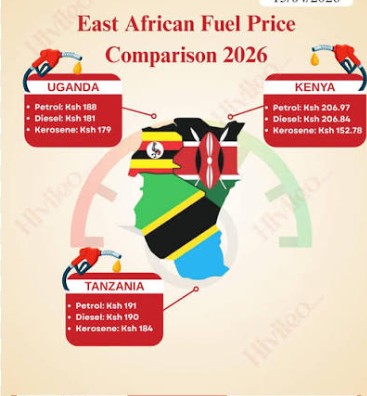
Compared with neighbouring countries, Tanzania has often been regarded as relatively competitive on fuel pricing within the East African Community, partly because of the efficiency of its bulk procurement system and the regulatory role of EWURA.
Economic Impact of Fuel Price Changes
Fuel is a major input cost across the Tanzanian economy:
- Transport and logistics – Public buses, trucks and taxis feel price changes immediately. Lower diesel prices reduce operating costs and can help stabilise passenger fares and freight rates.
- Agriculture – Farmers who use diesel for tractors, irrigation pumps and transportation of produce benefit from cheaper fuel.
- Manufacturing and industry – Factories that rely on generators or transport raw materials and finished goods see improved margins when diesel prices fall.
- Households – Petrol prices affect private motorists, while kerosene remains important for lighting and cooking in some rural and peri-urban areas.
Even modest monthly reductions can provide meaningful relief when multiplied across millions of litres consumed daily.
How EWURA Regulates Fuel Prices
EWURA is the independent regulator responsible for petroleum pricing on Tanzania Mainland. Under the Petroleum Act and the EWURA (Petroleum Products Price Setting) Rules, the authority publishes maximum wholesale and retail prices every month.
Key features of the system include:
- Transparent, formula-based pricing
- Location-specific caps that reflect actual transport costs
- Strict enforcement — stations that charge above the published maximum face penalties
- Requirement for dealers to display current prices clearly at pumps
Consumers are encouraged to report stations that overcharge. The USSD code 15200# allows anyone to verify the official maximum price for their area free of charge.
Tips for Motorists and Businesses
- Always check the official EWURA price for your location before filling up.
- Compare prices between nearby stations — some may sell below the maximum.
- Keep receipts, especially for business or fleet operations.
- Monitor global oil price trends and the monthly EWURA announcements (usually published at the beginning of each month).
- Consider fuel efficiency measures such as proper vehicle maintenance, route planning and, where feasible, alternative energy options.
Outlook for the Coming Months
Fuel prices in Tanzania will continue to move with international markets, exchange rates and geopolitical developments. EWURA has stated that it will keep monitoring global trends and adjust domestic prices accordingly. While the August reduction offers short-term relief, sustained lower prices will depend on further stabilisation of global oil markets and the Tanzanian shilling.
Longer-term factors that could influence prices include improvements in regional logistics, potential expansion of local storage capacity, and any future government interventions or subsidies during periods of extreme volatility.
As of August 2026, fuel prices in Tanzania have moved in a favourable direction for consumers. Petrol at TZS 3,898 per litre and diesel at TZS 3,978 per litre in Dar es Salaam represent noticeable savings compared with previous months. Prices remain higher inland, but the overall trend is downward.
Understanding how EWURA sets prices, knowing the exact rates for your location, and following monthly announcements helps drivers and businesses plan better and avoid overpaying. For the most accurate and up-to-date information, always refer to official EWURA publications or the free USSD service 15200#.
Fuel remains one of the most closely watched economic indicators in Tanzania. The August 2026 price cuts provide welcome breathing space — and a reminder of how closely local pump prices are tied to global energy markets.
- AFCON 2027 Preparations Status in Tanzania, Kenya and Uganda
- Tanzania SGR Expansion: The Ultimate Guide to the Tabora-Kigoma Railway Line (Lot 6)
- Uganda Airlines Boeing Fleet Expansion: Transforming Entebbe into a Strategic Global Aviation Hub
- HELB Portal Login, Application, and Status Check: The Ultimate Guide for Kenyan Students